
Sr. Lect. Zati Hakim Azizul Hasan
Universiti Malaya, Malaysia
Biography: Dr Zati Hakim Azizul Hasan is a Senior Lecturer at the Department of Artificial Intelligence, Faculty of Computer Science & Information Technology, Universiti Malaya. She currently serves as a Coordinator at Pusat Teknologi Inovasi under the UM’s Deputy Vice-Chancellor (Research & Innovation). She previously coordinated the Master of Computer Science (Research) and Master of Computer Science (Applied Computing) programs (2021–2025), strengthening postgraduate training and research capacity. Her research covers AI robotics, swarm optimisation, SLAM, and soft sensor technologies, with applications in search and rescue, food security, intelligent farming, water monitoring, and genomics. She has secured RM2.14 million in competitive funding and, in 2025, was awarded RM8.5 million by the Ministry of Higher Learning for the UM AI Robotics Teaching and Learning Empowerment Project—a landmark initiative advancing national education and innovation. Dr Zati has published in Swarm and Evolutionary Computation, IEEE Access, and PeerJ Computer Science, and collaborates internationally with UK and ASEAN partners, supported by Microsoft AI for Earth, the British Council Catalyst Grant, and UKRI. She leads talent development through UM’s AI Robotics Lab (https://www.robotedge.dev/), where her students won awards at RoboCup Asia Pacific, RoboCup Malaysia Open, IEEE Malaysia competitions, and international innovation carnivals. Dr Zati’s community engagement includes KitaK2K with ThinkCity since 2024, ensuring children in public housing (PPR) gain equal access to robotics education, reflecting UM’s mission of inclusive education and societal transformation.
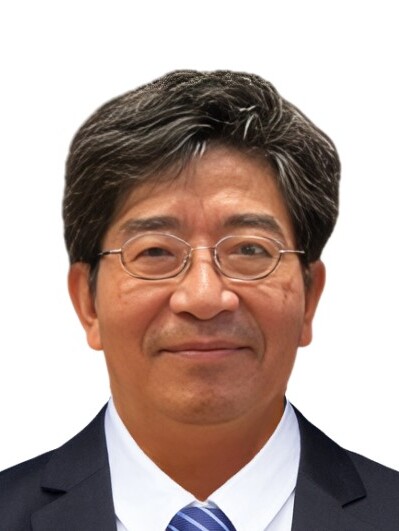
Prof. Chin-Shiuh Shieh
National Kaohsiung University of Science and Technology, Taiwan
Biography: CHIN-SHIUH SHIEH received the M.S. degree in electrical engineering from the National Taiwan University, Taipei, Taiwan, in 1991, and the Ph.D. degree from the Department of Computer Science and Engineering, National Sun Yat-sen University, Kaohsiung, Taiwan, in 2009. He joined the Faculty of the Department of Electronic Engineering, National Kaohsiung University of Science and Technology, Kaohsiung, in August 1991, where he is currently a professor. His research interests include Information Security, Computational Intelligence, Artificial Intelligence, Computer Networking.
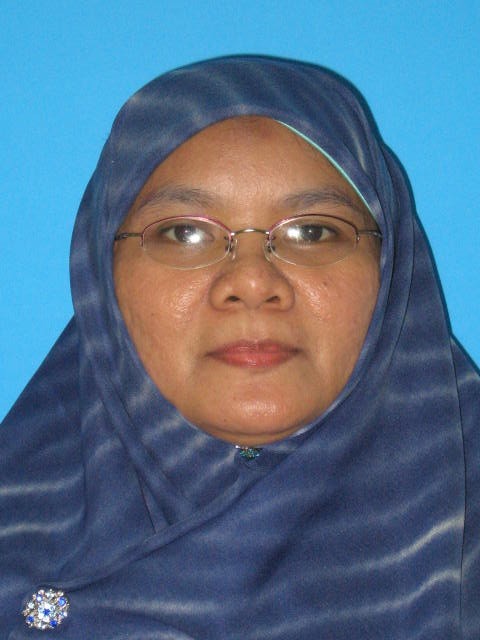
Prof. Derwin Suhartono
BINUS University, Indonesia
Biography: Prof. Derwin Suhartono is a Professor of Artificial Intelligence and Dean of the School of Computer Science at BINUS University, Indonesia. His research interests include Natural Language Processing, Personality Computation, Digital Psychology, and Human-Centered AI. He has published extensively in international venues and has led numerous AI research and industry collaboration projects. His work focuses on understanding human behavior through computational approaches and developing AI technologies that create meaningful societal impact.
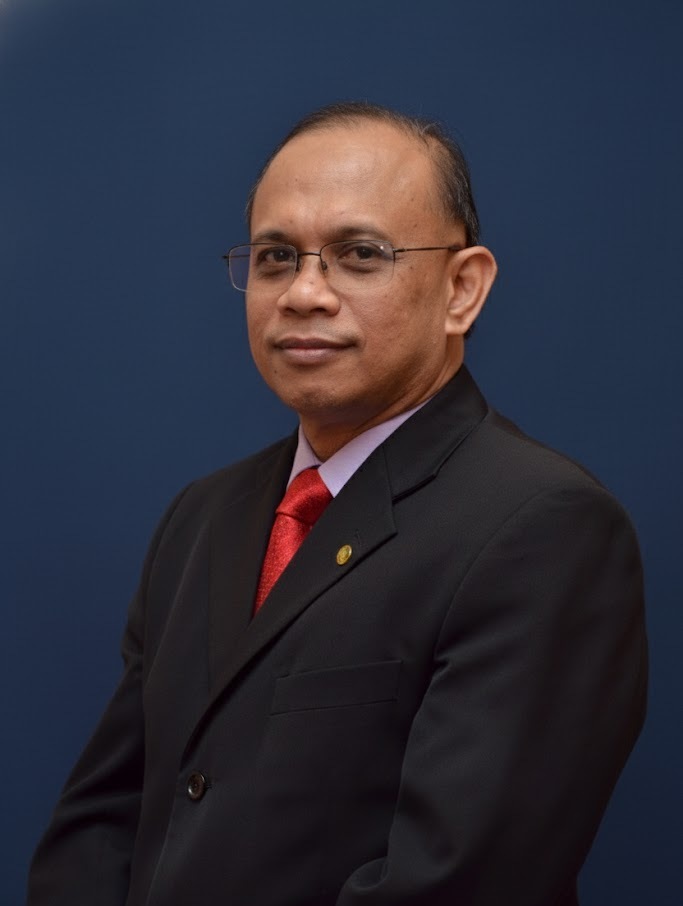
Prof. Amir Akramin bin Shafie
International Islamic University Malaysia,
Malaysia
Biography: Amir Akramin Shafie is a Professor in the Department of Mechatronics at International Islamic University Malaysia (IIUM) where he has been since 2005. He is also currently the Principal Director of Academic and Internationalization. Previous administrative post includes Deputy Dean Academic Affairs Kulliyyah of Engineering (2006-2010), Dean of Kulliyyah of Engineering (2010-2012), Director of Industrial Links (2013-2016), Director of Office of International Affairs (2017 -2021), Director of Research Management Centre (RMC) (2021-2023) and Deputy Rector Responsible Research and Innovation (2023-2024). He is also appointed as visiting professor and external assessor for several public and private university in Malaysia. Previously Dr. Amir served in the industry as Industrial Researcher in SIRIM Berhad and Engineer in Proton Berhad. Dr Amir Akramin Shafie, received his B.Eng. (Hons) in Mechanical Engineering from the University of Dundee and Master of Science in Mechatronics from University of Abertay Dundee, Scotland. He has been conferred a doctorate in the field of Engineering by University of Dundee, Scotland in 2000. Dr Amir has been the recipients of numerous research grants which resulted in publication of patents and copyrights. Dr Amir also has published more than 500 articles in books, refereed journals and various international conferences as editors, authors and co-authors some of which have been highly cited. Recently Dr Amir has completed an internatioal consultancy project to upgrade a conventional factory to a smart factory with connectivity and autonomy for self-adapting manufacturing capability. Current research interest span both autonomous mechatronic system and intelligent system. The work in autonomous mechatronic system mainly in the areas of robotic development including robot design and locomotion, robotic sensing and perception and autonomous navigation system. Whereas for intelligent system the work involved development of application of machine learning in various areas which includes advanced manufacturing and health.
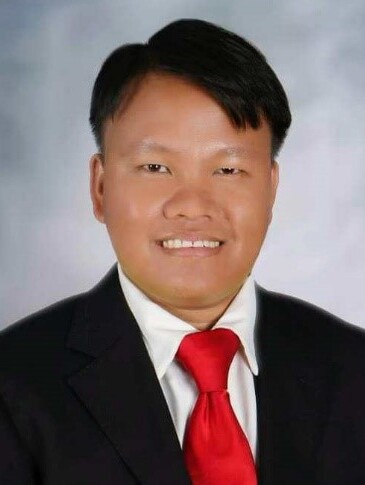
Dr. Rolysent Paredes
Misamis University, Philippines
Biography: Rolysent Paredes is a faculty member of Misamis University in Ozamiz City, Philippines, where he teaches core professional subjects for the Bachelor of Science in Information Technology (BSIT) and Bachelor of Science in Computer Science (BSCS) programs. He is also the administrator of the university’s network infrastructure. He is a Cisco-certified Academy instructor as well. He received his doctorate degree in information technology from the Technological Institute of the Philippines, Quezon City. He is an associate member of the National Research Council of the Philippines (NRCP). He is invited to several international research conferences whose topics include data mining, artificial intelligence, and computer networks.
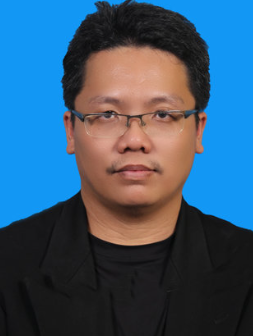
Dr. Adam Wong Yoon Khang
Technical University of Malaysia Malacca, Malaysia
Biography: Adam Wong Yoon Khang received his Ph.D. Degree from Universiti Teknologi Malaysia in 2018. He is currently a Senior Lecturer in the Fakulti Teknologi Kejuruteraan Elektrik dan Elektronik, Universiti Teknikal Malaysia Melaka (UTeM). He is also a Professional Technologist for the Malaysia Board of Technologists (MBOT). Before joining the academia, he served various companies from 2007 until 2011 as a commercial engineer in industries ranging from manufacturing to service providers. His current research interests are the Internet of Things, Hybrid Optical Wireless, simulation optimization, ad hoc network and passive optical network but not limited to the mentioned topic here. He actively publishes research articles and received grants from the government and private sectors, universities and international collaboration.
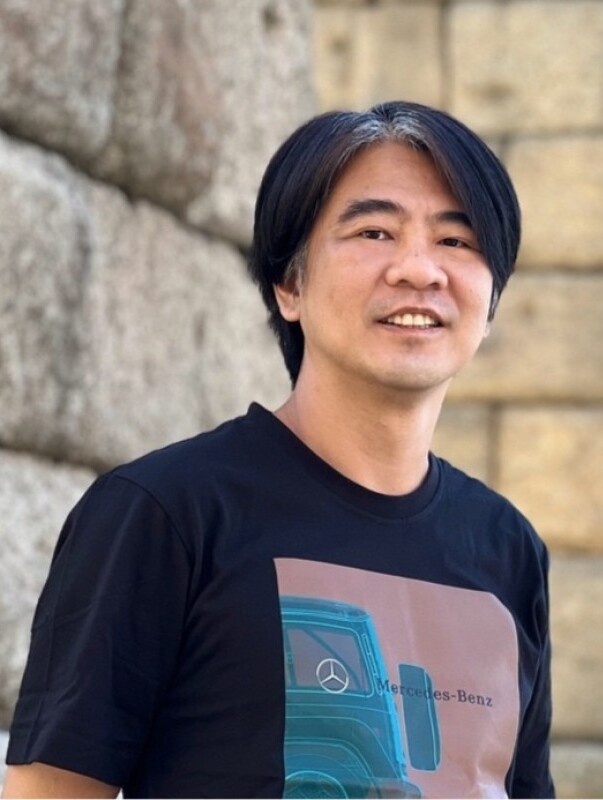
Prof. Yi-Zeng Hsieh
National Taiwan University of Science and Technology, Taiwan
Biography: Yi-Zeng Hsieh (Senior Member, IEEE; Member IET) received his B.S., M.S., and Ph.D. degrees in Computer Science and Information Engineering from National Central University, Taiwan, in 2004, 2006, and 2012, respectively. In 2023, he was recognized as an Outstanding Young Scholar by the IEEE Consumer Technology Society. He has authored over 100 journals and refereed conference papers. Currently, he is a professor in the Department of Electrical Engineering at National Taiwan University of Science and Technology, Taipei, Taiwan. He is also a Senior Member of both the IEEE Consumer Technology Society and the IEEE Signal Processing Society. He serves a Member of both IET Taipei Local Network and IET Japan Local Network. Additionally, he serves as an associate editor for multiple IEEE Transactions. His research interests include deep learning, machine learning, neural networks, pattern recognition, image processing, computer vision, and swarm intelligence.