
Prof. Yen-Wei Chen
Ritsumeikan University, Japan
Speech title: From Data-Centric to Knowledge-Guided Deep Learning in Advanced Biomedical Image Analysis
Abstract: Deep Learning (DL) has achieved
remarkable success across various domains,
particularly in computer vision and image
recognition. In medical imaging, although DL
models have demonstrated state-of-the-art
performance, their translation into
real-world clinical practice remains
limited. This gap stems from two fundamental
challenges: the scarcity of large-scale
annotated datasets and the "black-box"
nature of conventional DL models, which
undermines clinical trust and
interpretability. In this talk, I will
present a paradigm shift from data-centric
deep learning toward knowledge-guided
multimodal learning—an approach that
integrates clinical wisdom as an active
component of the model itself, ad introduce
two complementary strategies for infusing
domain knowledge into deep learning:
(1) Explicit knowledge guidance, which
integrates unstructured radiology reports
with medical images using cross-modal
attention mechanisms to enhance both
accuracy and explainability.
(2) Implicit knowledge distillation, where
genetic information serves as a teacher
during training, transferring its predictive
power to a student network that relies
solely on CT images at inference
time—enabling scalable, cost-effective
precision diagnostics.
Biography:
Yen-Wei
Chen
received
the B.E.
degree
in 1985
from
Kobe
Univ.,
Kobe,
Japan,
the M.E.
degree
in 1987,
and the
D.E.
degree
in 1990,
both
from
Osaka
Univ.,
Osaka,
Japan.
He was a
research
fellow
with the
Institute
for
Laser
Technology,
Osaka,
from
1991 to
1994.
From
Oct.
1994 to
Mar.
2004, he
was an
associate
Professor
and a
professor
with the
Department
of
Electrical
and
Electronic
Engineering,
Univ. of
the
Ryukyus,
Okinawa,
Japan.
He is
currently
a
professor
with the
college
of
Information
Science
and
Engineering,
Ritsumeikan
University,
Japan.
He is
the
founder
and the
first
director
of
Center
of
Advanced
ICT for
Medicine
and
Healthcare,
Ritsumeikan
University,
Japan.
Since
April
2024, he
has been
a
Foreign
Fellow
of the
Engineering
Academy
of
Japan.
His
research
interests
include
medical
image
analysis,
computer
vision
and
computational
intelligence.
He has
published
more
than 300
research
papers
in a
number
of
leading
journals
and
leading
conferences
including
IEEE
Trans.
Image
Processing,
IEEE
Trans.
Medical
Imaging,
CVPR,
ICCV,
MICCAI.
He has
received
many
distinguished
awards
including
ICPR2012
Best
Scientific
Paper
Award,
2014
JAMIT
Best
Paper
Award.
He
is/was a
leader
of
numerous
national
and
industrial
research
projects.
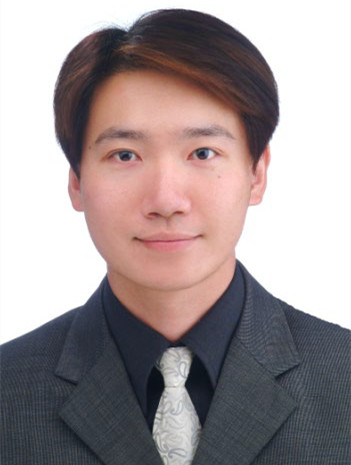
Prof. Mu-Yen Chen
National Cheng Kung University, Taiwan
Speech title: From Model Capacity to Inductive Bias: Rethinking Deep Learning Models for Non-Stationary Financial Time Series
Abstract: Over the past decade, the
evolution of deep learning for time-series
forecasting has largely followed a single
trajectory: increasing model size. From LSTM
to Transformer and its many variants, and
more recently to time-series foundation
models pretrained across domains, mainstream
research has implicitly assumed that greater
model capacity leads to higher accuracy.
Financial time series, however, do not
conform to this assumption. They are highly
non-stationary, have low signal-to-noise
ratios and weak long-term memory, behave
much like random walks, and undergo
continual distribution shifts as market
conditions change. What, then, does added
complexity offer for such data?
This study argues that deep learning for
financial time series is undergoing a
paradigm shift from expanding model capacity
to adopting inductive biases that match the
underlying data structure. Two recent
studies published in Applied Soft Computing
provide the starting point. The first
deliberately combines all mechanisms
considered effective into a single hybrid
architecture as a complexity probe,
comparing it against a range of baselines
under a fair benchmark with shared
normalization and training protocols. The
results show that instance-level
distribution alignment, rather than
architectural complexity, is the key
determinant of accuracy, with lightweight
recurrent and linear models performing
better. The second uses a
decomposition–residual architecture as a
controlled testbed to systematically compare
fusion strategies in hybrid systems. The
results show that parameter-free direct
addition outperforms learnable gating
mechanisms. A model with just over 20,000
parameters can perform on par with the
statistically leading group while
substantially outperforming heavyweight
attention models. Together, these studies
indicate that shorter lookback windows and
parsimonious parameterization yield better
performance. They also show that
improvements in statistical accuracy do not
necessarily translate into economic value;
under the efficient market hypothesis (EMH),
these two dimensions must be evaluated
separately.
Looking ahead, this study will discuss three
research directions: (1) treating
distribution-shift handling as a core model
component, developing more adaptive
normalization mechanisms and model designs
that adapt to market conditions and transfer
across settings; (2) combining the
statistical advantages of large-scale
pretrained foundation models with
task-specific structural inductive biases
within affordable computational budgets,
while acknowledging the inherent
predictability ceiling of financial time
series; and (3) establishing a culture of
fair, reproducible evaluation that
incorporates economic value, allocating
limited model capacity where it is most
effective, and advancing trustworthy
financial AI.
Biography: Dr. Chen is a Distinguished Professor of Engineering Science at National Cheng Kung University, Taiwan. He received his PhD from Information Management from National Chiao-Tung University in Taiwan. His current research interests include artificial intelligent, soft computing, data mining, deep learning, context-awareness, machine learning, and social network mining with more than 200 publications in these areas. He has co-edited several special issues in International Journals (e.g. IEEE Transactions on Engineering Management, IEEE Access, ACM Transactions on Management Information Systems, ACM Transactions on Sensor Networks, Computers in Human Behavior, Applied Soft Computing, Soft Computing, Information Fusion, Journal of Real-Time Image Processing, Sustainable Cities and Society, Neurocomputing, Supercomputing, Enterprise Information Systems, Journal of Medical and Biological Engineering, Computational Economics). He has served as Editor in Chief and Associate Editor of international journals [e.g. International Journal of Big Data and Analytics in Healthcare, IEEE Transactions on Engineering Management, IEEE Access, Applied Soft Computing, Granular Computing, Human-centric Computing and Information Sciences, Journal of Information Processing Systems, International Journal of Social and Humanistic Computing] while he is an editorial board member on several SCI journals.

Prof. Wanida Kanarkard
Khon Kaen University (KKU), Thailand
Speech title: Scaling AI-Powered Environment and Energy Innovations for a Sustainable Tomorrow
Abstract: As global climate action
reaches a critical juncture, Artificial
Intelligence (AI) emerges as a vital
catalyst in accelerating the transition
toward Net Zero and sustainable development.
The talk explores the future trajectory of
AI-driven green technologies, illustrating
how higher education institutions act as
living laboratories for scalable
sustainability solutions. Through the Smart
City Operation Center (SCOPC), demonstrates
how university-led research leverages
real-time IoT networks, spatial analytics,
and emerging AI technologies ranging from
predictive machine learning and digital
twins to multi-agent optimization to
optimize campus energy consumption, reduce
carbon footprints, and automate waste
management, establishing an operational
blueprint for a Green University. Extending
beyond campus boundaries, this session
highlights applied AI research directly
influencing Thai public policy and
industrial practices. Key case studies
showcase data-driven frameworks designed for
tracking and managing industrial hazardous
waste, alongside optimization models that
accelerate the transformation of organic
waste into bioenergy. By integrating policy
intelligence with cutting-edge AI
technologies, these innovations enhance
circular economy strategies, improve
regulatory enforcement, and accelerate to
achieve decarbonization goals, build climate
resilience, and advance a sustainable
future.
Biography: Prof. Dr. Wanida Kanarkard graduated with second class honors in Computer Engineering from Khon Kaen University, Thailand. She further pursued her academic journey with a master’s degree in Advanced Computing from Imperial College London, UK, and Ph.D degree in Computer Engineering from the University of Hertfordshire, UK. Her academic journey was further enriched by postdoctoral research in Mobile Computing at the National Institute of Informatics (NII), Japan. Since joining Khon Kaen University in 1995, Prof. Dr. Wanida has been a driving force in integrating digital innovation with urban and environmental sustainability. As the Director of the Smart City Operation Center, she has spearheaded initiatives to transform the university into a Green Campus, focusing on energy efficiency and environmental stewardship. Her pioneering work extends to the development of smart cities across Thailand, where she leverages digital technologies to advance the circular economy, particularly in waste management—including plastic, industrial, electronic, and biomass waste—turning challenges into valuable opportunities. With numerous internationally published research papers and a few awards to her credit, reflecting her commitment to bridging technology, sustainability, and societal impact.